


By Snap News Daily Environment Desk | March 4, 2026
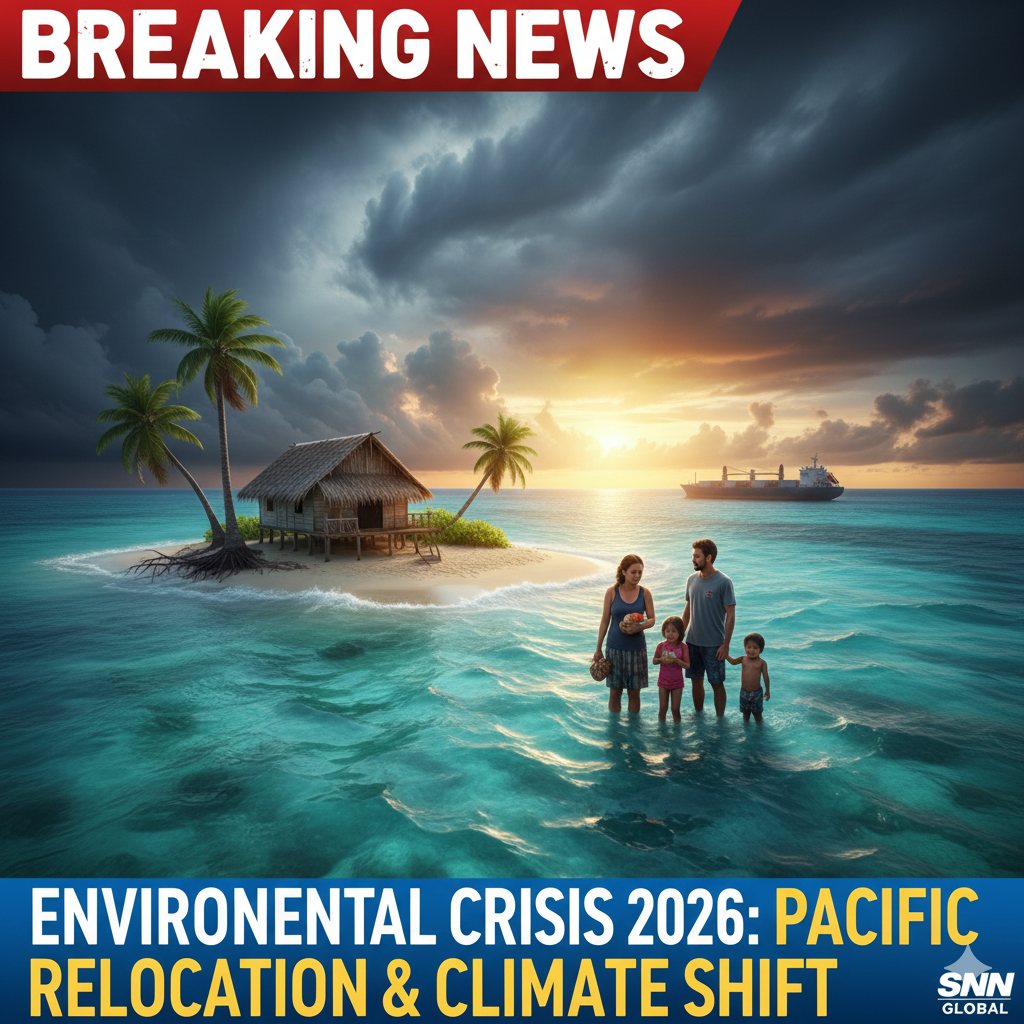
The Environmental Crisis 2026 has reached a dangerous milestone today, March 4, as Pacific Islands begin historic relocation efforts. The global Environmental Crisis 2026 has reached a historic and somber milestone. Today, March 4, 2026, Pacific Island nations officially launched the world’s first regional framework for climate-related relocation. As rising sea levels, extreme king tides, and coastal erosion make ancestral lands uninhabitable, thousands are being forced to leave their homes. This development serves as a stark warning that the ecological tipping points scientists feared are now a daily reality.
The Pacific Exodus: A Human Rights Landmark
Gathered in Nadi, Fiji, leaders from across the Pacific have introduced the “Pacific Regional Guidance on Planned Relocation.” This document is the first of its kind, grounded in human rights principles to protect the dignity of “climate refugees.”
For islands like Kiribati, Tuvalu, and the Solomon Islands, the Environmental Crisis 2026 is not a future threat—it is an existential one. Entire communities are being moved to higher ground or neighboring countries as saltwater intrusion destroys freshwater aquifers and renders agricultural land useless. Experts warn that without massive international funding, these frontline nations will face a total loss of sovereign territory by the end of the decade.
Conflict and Carbon: The Ecological Toll of War
While the Pacific sinks, the Middle East is facing a different kind of ecological disaster. The ongoing military operations in the Persian Gulf have added a toxic layer to the Environmental Crisis 2026. Recent strikes on oil refineries and chemical storage facilities have released massive plumes of black smoke containing dioxins and sulfur dioxide, posing long-term health risks to millions.
- Marine Pollution: Reports of oil tankers being hit in the Strait of Hormuz have raised fears of a catastrophic oil spill that could devastate the Red Sea’s coral reefs.
- Military Carbon Footprint: New data suggests that global military activities now account for over 5.5% of total greenhouse gas emissions, further accelerating global warming during this critical period.
Extreme Weather Patterns: Floods and Malaria
The Environmental Crisis 2026 is also reshaping the global health landscape. In Southern Africa—specifically Mozambique and South Africa—unprecedented flooding in early 2026 has created vast stagnant pools of water.
Scientists from the University of Pretoria have warned that these “disease landscapes” are causing a surge in malaria transmission. As floodwaters recede, the risk to human life often increases, showing how climate change directly fuels humanitarian and health emergencies. The link between extreme weather and infectious diseases has never been more evident than it is today.
The $1.3 Trillion Climate Finance Goal
As we look toward the upcoming COP31 in Antalya, Türkiye, the focus is shifting to money. Developing nations are demanding that the $1.3 trillion annual climate finance goal be met. The Environmental Crisis 2026 has proven that adaptation is far more expensive than prevention, yet global investment in green energy and resilient infrastructure still lags behind military spending.
Economists argue that without robust capital controls and a shift away from fossil fuel reliance, the biosphere collapse will become irreversible. The “Triple Planetary Crisis”—climate change, biodiversity loss, and pollution—requires a unified global response that transcends national borders.
What Lies Ahead for Our Planet?
The Environmental Crisis 2026 is a call to action. From the sinking shores of Fiji to the smog-filled skies of the Middle East, the message is clear: the era of climate delay is over.
Stay tuned to Snap News Daily for in-depth reports, expert interviews, and live updates on the global efforts to combat the climate crisis. We are dedicated to bringing you the stories that matter for the future of our planet.